A data-driven approach to model an in-demand product that includes business analysis, proof of concept (POC), design concept, and project estimate.
A complex human-centered process of developing a valuable product that blends business goals and user needs with design thinking in mind.


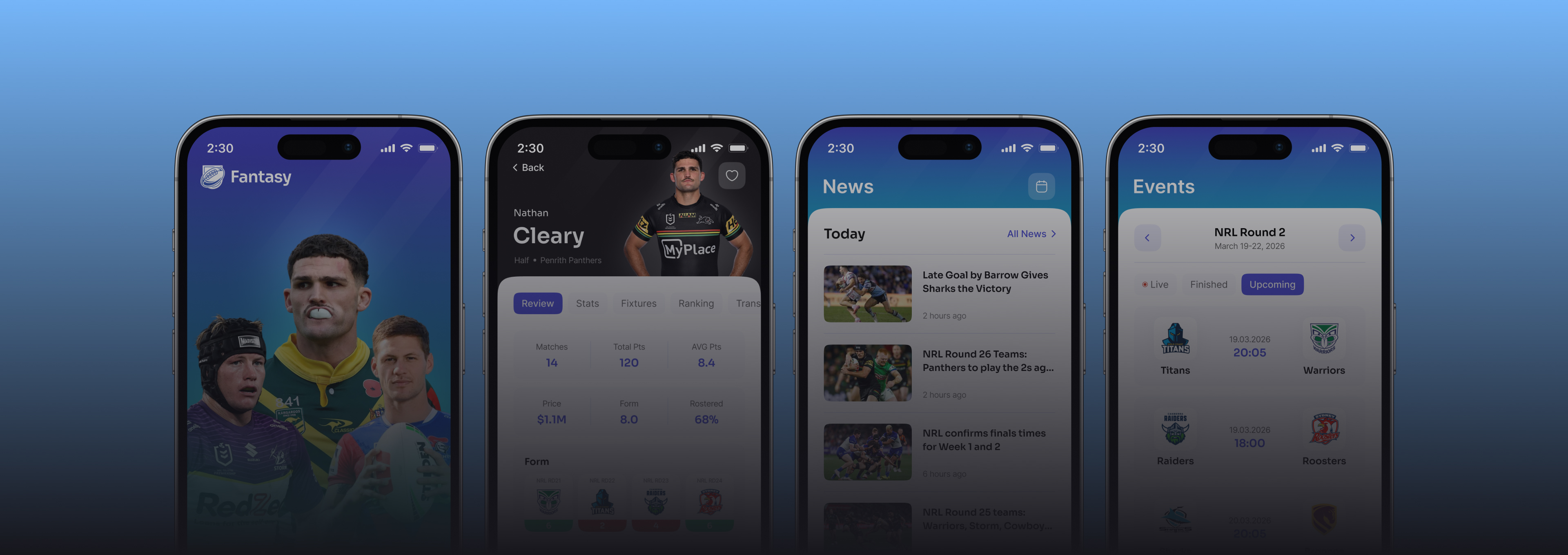
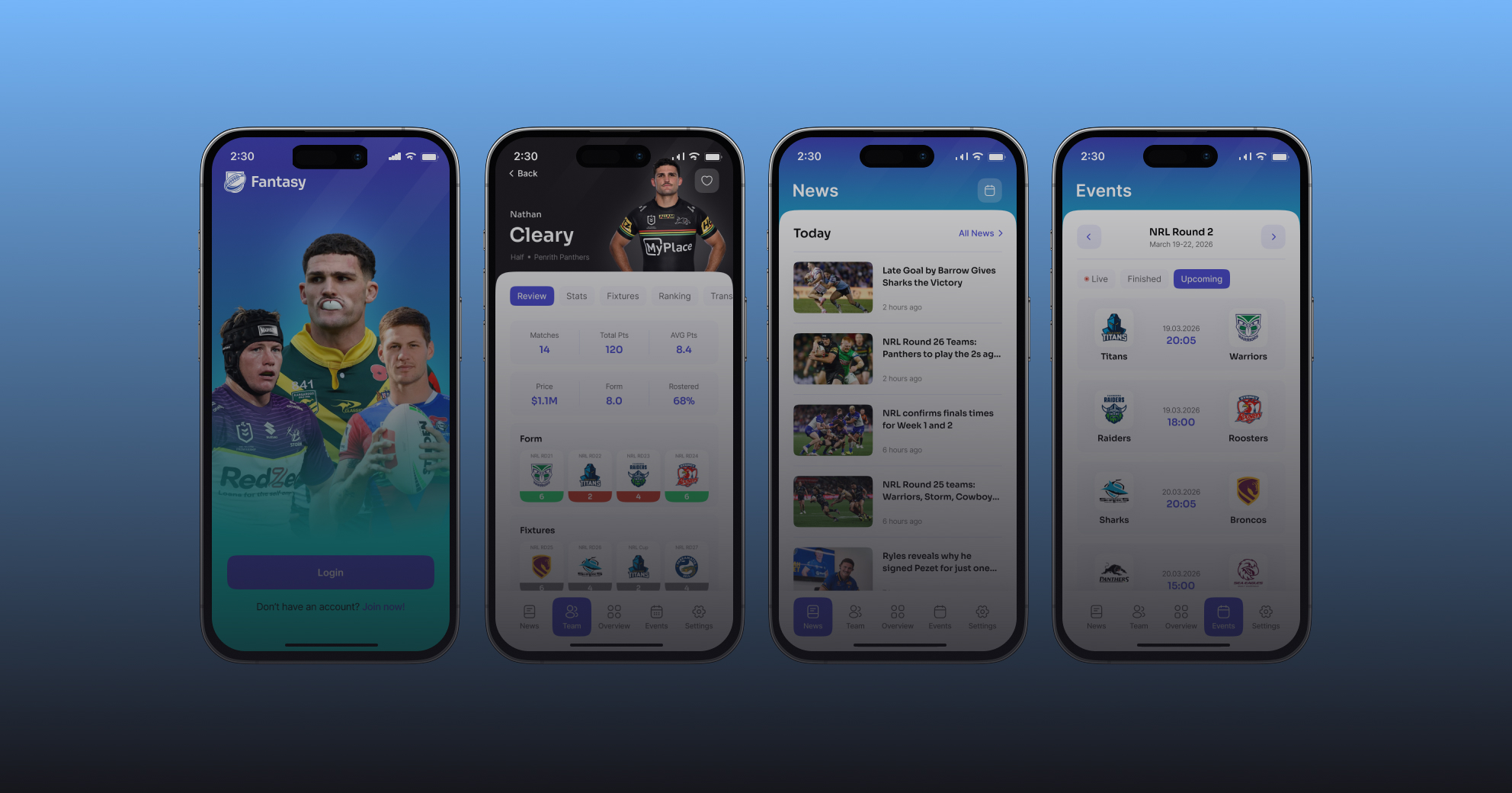
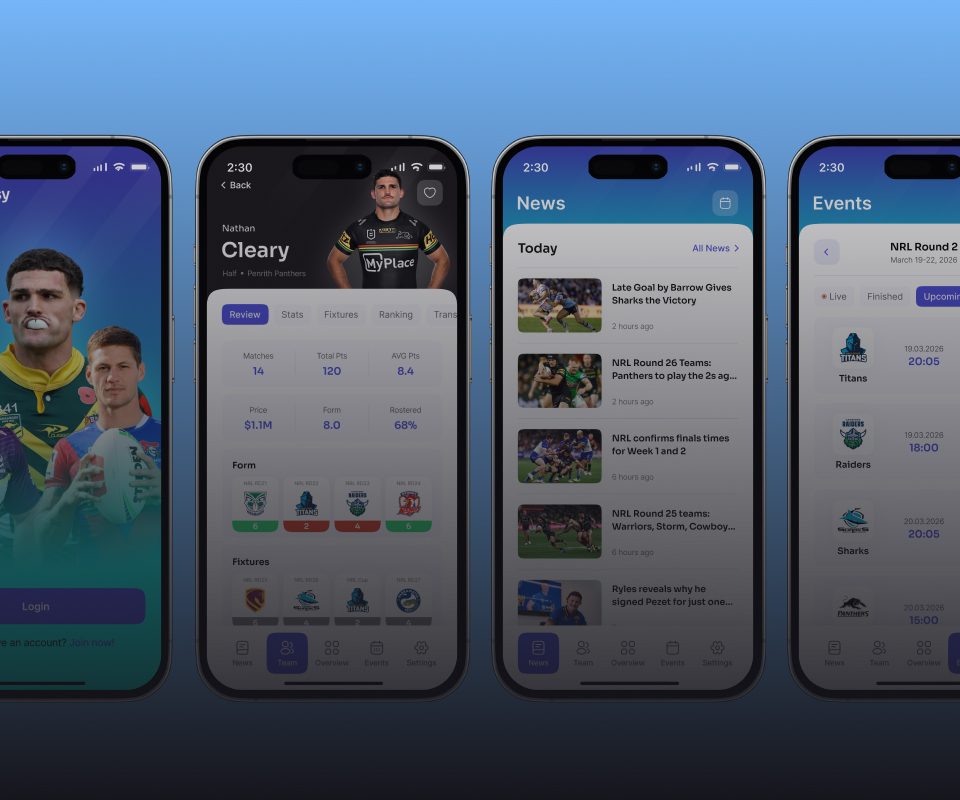
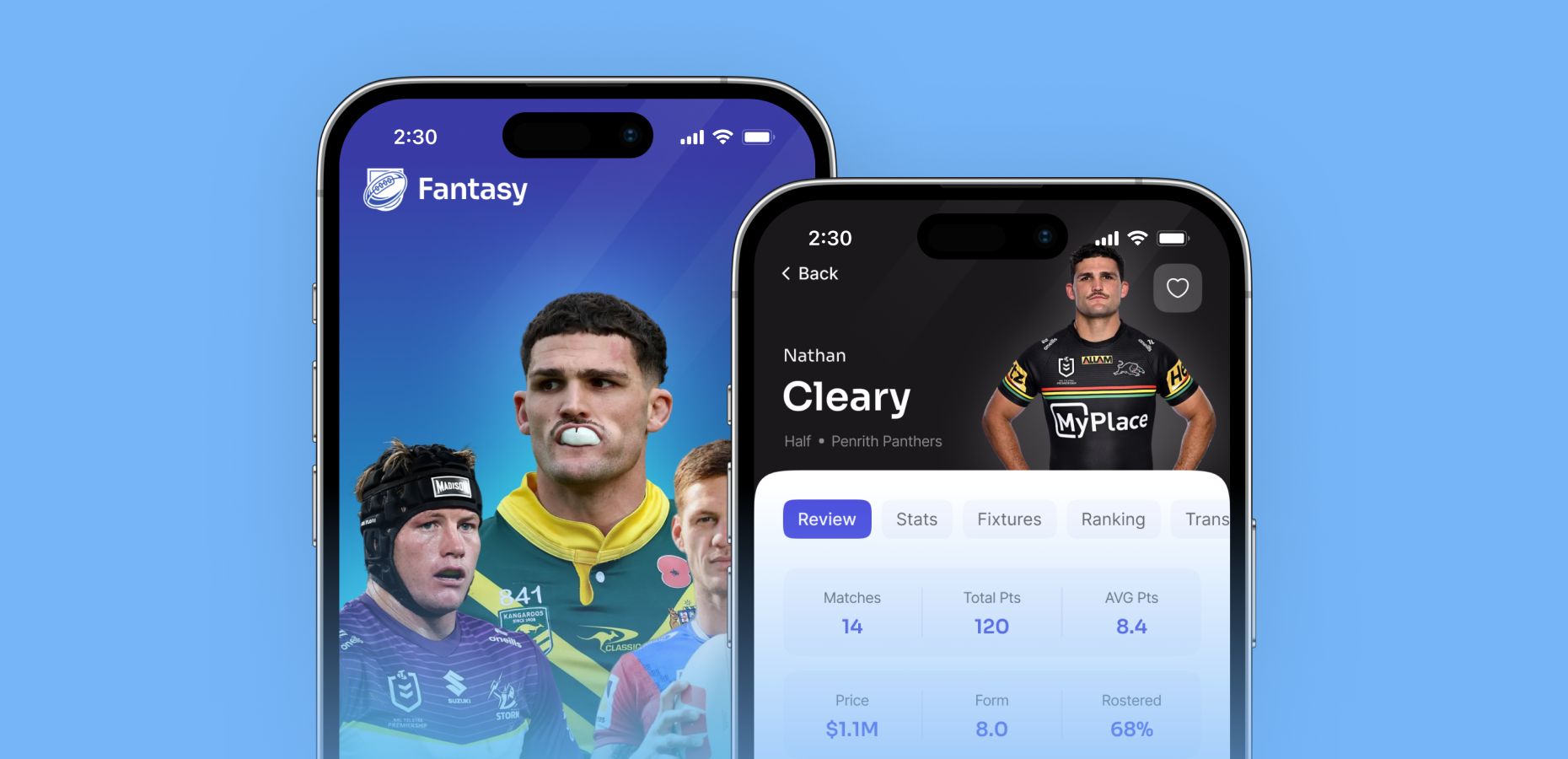
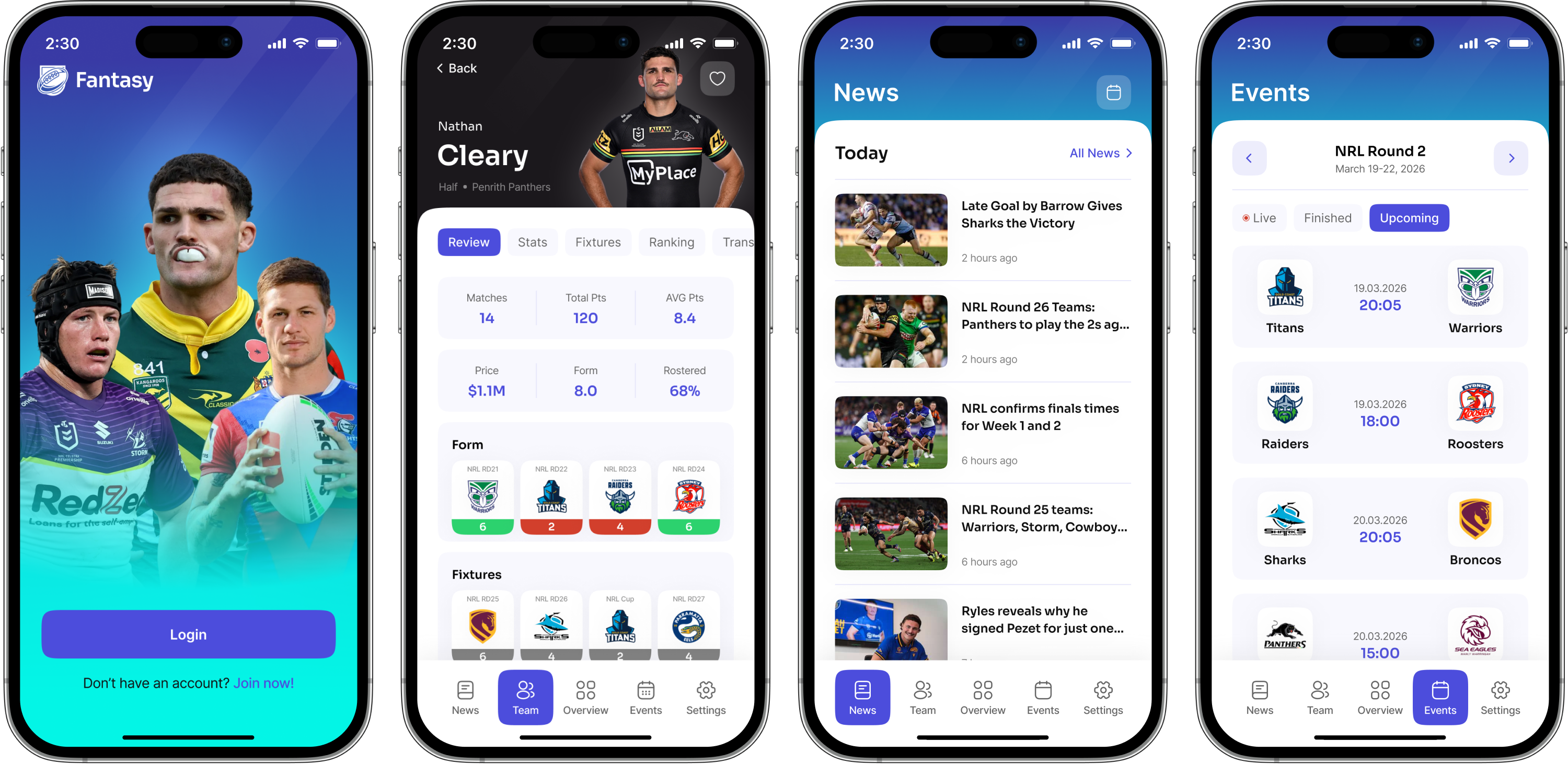
A fantasy rugby app that sits alongside editorial website's content and gives fans a reason to check in daily
In early 2025, one of South Africa’s sports news websites with millions of monthly readers came to Uinno with a clear problem. Their rugby coverage was excellent, but fans only showed up on match days. From Monday to Thursday, traffic dropped.
They needed something that would bring fans back every single day.
The goal was to design a fantasy rugby app that would sit alongside their editorial content and give fans a reason to check in daily.
Over 8 months, Uinno designed, built, and launched Rugby Fantasy App that now serves as the client’s primary engagement product.
Client: Under NDA (a South African sports news platform)
Delivery: September 2025
Engagement: 8 months
We spent six weeks studying every fantasy rugby app on the market. And we found that market was full of frustrated users. These apps weren’t terrible in concept, but they just kept letting fans down in the same ways over and over:

At the same time, users clearly loved certain things like the social element of private leagues with friends, live notifications during matches, detailed player stats for those who wanted them, and simpler game formats that didn’t require 20 minutes of squad management every week.
Our Rugby Fantasy App was designed to be dead simple for the casual fan who has 30 seconds between meetings, and deep enough for the dedicated manager who wants full control over a 23-player squad. We did this through a dual-mode system.

This is the mode that 7 out of 10 users choose. You pick 6 players, one from each positional group, tap your captain, and you’re done. No budget. No salary cap. No transfer penalties. Your team resets every gameweek, so you’re never stuck with a bad pick. The whole thing takes about 30–45 seconds.
For fans who want the full experience, Full Squad mode gives you a 23-player team with a R150 million budget, dynamic player pricing that moves based on form and demand, and 6 free transfers per gameweek.
Available in both modes, this lets you challenge a specific friend to a single-gameweek showdown. It was built around WhatsApp sharing. You tap ‘Challenge,’ pick a friend, and the app generates a shareable card with both your lineups. In South Africa, where WhatsApp is the dominant messaging platform, this became the app’s most powerful word-of-mouth growth engine.

Since the market already had established players, the new app had to be better in all aspects. Uinno’s team specifically engineered the app to avoid the pain points that plagued every other fantasy rugby platform. Here’s how:
We built a two-layer login system. Your session stays alive for 90 days in the background. If it does expire, the app quietly refreshes it without you ever seeing a login screen. You can also use the app on up to 3 devices at once (phone, tablet, work phone) without one kicking the other out. The result: essentially zero login problems across the entire user base since launch.
Live match data flows from Opta (the same data provider used by Premier League football) through a three-step process: receive the event, verify it wasn’t reversed by the TMO, then calculate points and send notifications. The whole thing takes about 6 seconds from the moment something happens on the pitch to the moment you see it in the app. After every match, we run an automatic check that compares our scores to the official final stats and corrects any differences, with a clear notification explaining what changed and why.
The app saves everything locally on your phone. When you open it, it shows your data instantly from local storage and updates in the background. Switch to WhatsApp, come back 10 minutes later and you’re exactly where you left off. We measured this at 0.3 seconds to resume, compared to 4–7 seconds of loading on some competitor apps.
If you’re at Loftus Versfeld and your phone has no signal, you can still set your team, make transfers, and pick your captain. Everything queues up and syncs the moment you get connectivity back. This was a direct response to a common complaint we heard that fans at packed stadiums losing access to their team right when they needed it most.
The main options are Opta (Stats Perform), Sportradar, and Sportmonks. Opta is the industry standard, used by the Premier League, Six Nations, and URC. It has the best accuracy and speed but comes with premium pricing and enterprise contracts. Sportradar is strong in rugby league and improving in union. Sportmonks is more affordable but coverage varies by tournament.
We cover the full scope from discovery to post launch support. That includes discovery workshops, UX and UI design, native iOS and Android development (or cross-platform), backend and API development, live sports data integration (Opta, Sportradar, Sportmonks), scoring engine development, admin panel and CMS bridge, WhatsApp and social sharing integration, offline architecture, QA and load testing, app store submission, and ongoing maintenance. We also help with game mode design, and scoring model creation if you are starting from scratch and need guidance on how the fantasy game itself should work.
Yes. We build a content bridge that connects the fantasy platform to your existing CMS. This lets your editorial team tag articles with fantasy relevance scores, embed interactive player cards inside match previews, and trigger push notifications from team news. The integration works both ways. Fantasy activity drives traffic to your editorial content, and your articles help fans make better fantasy decisions, which keeps them engaged with both products.
you have a vision