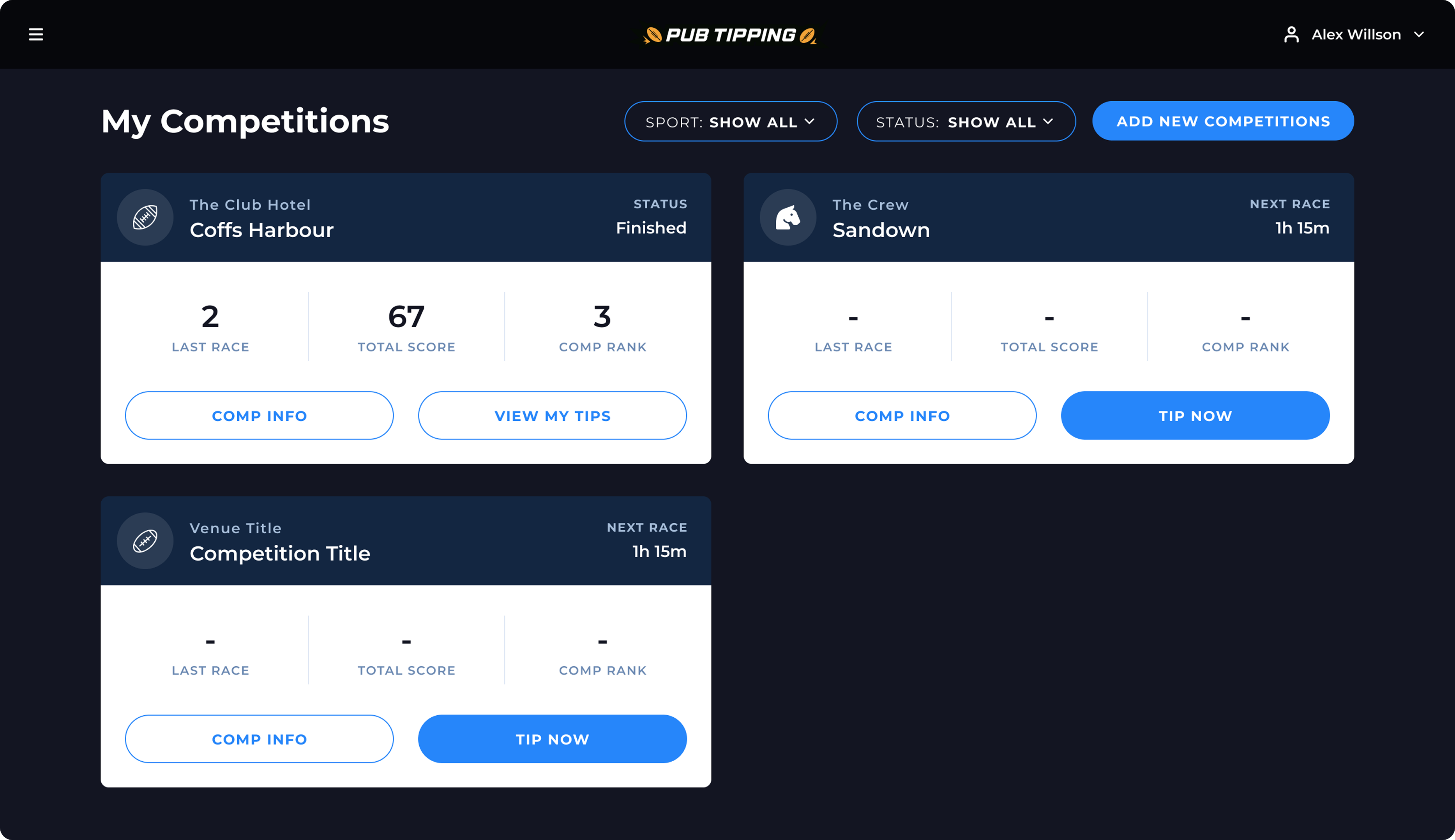
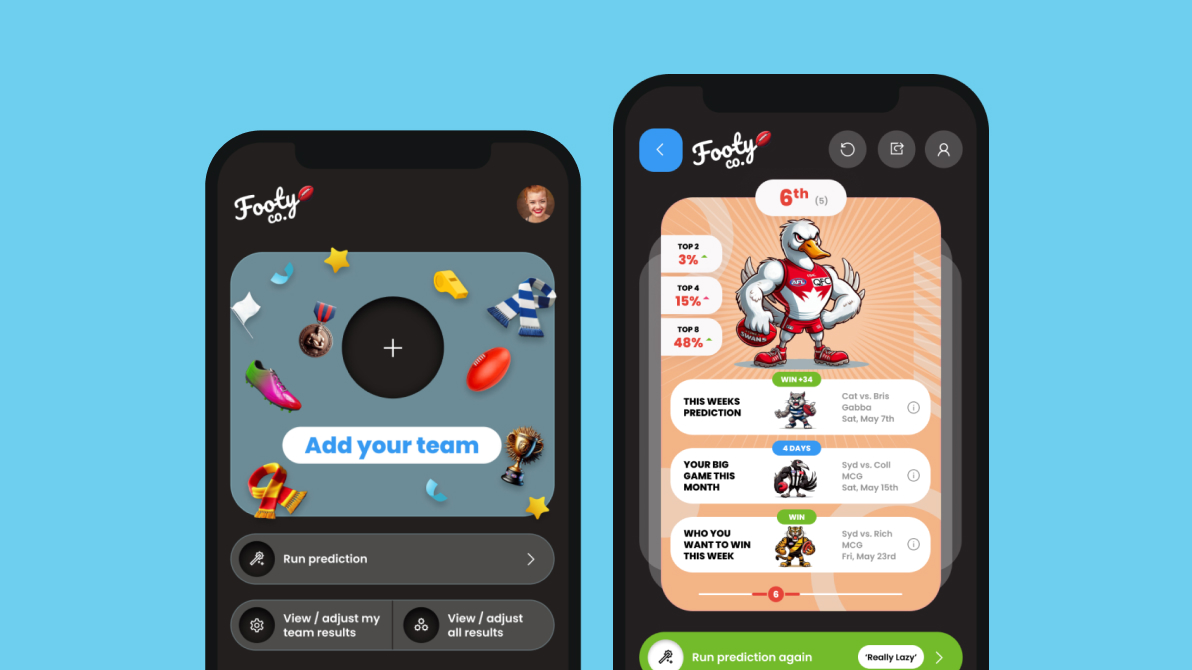
Driving User Engagement & adoption across Australia. Used in 400 pubs.
Project Highlights
Broad Adoption: The app is actively used by over 400 pubs.
Scalability: Designed with expansion in mind, the platform can easily accommodate an increasing user base without compromising performance or user experience.
Versatile Backend: The backend architecture is built as a flexible platform, facilitating the addition of new sports types and that can be further customized to suit the specific requirements of each sport.
Rapid Development: Despite the complex features, the core backend functionality of the application was developed in a brisk time frame of just 1.5 months.
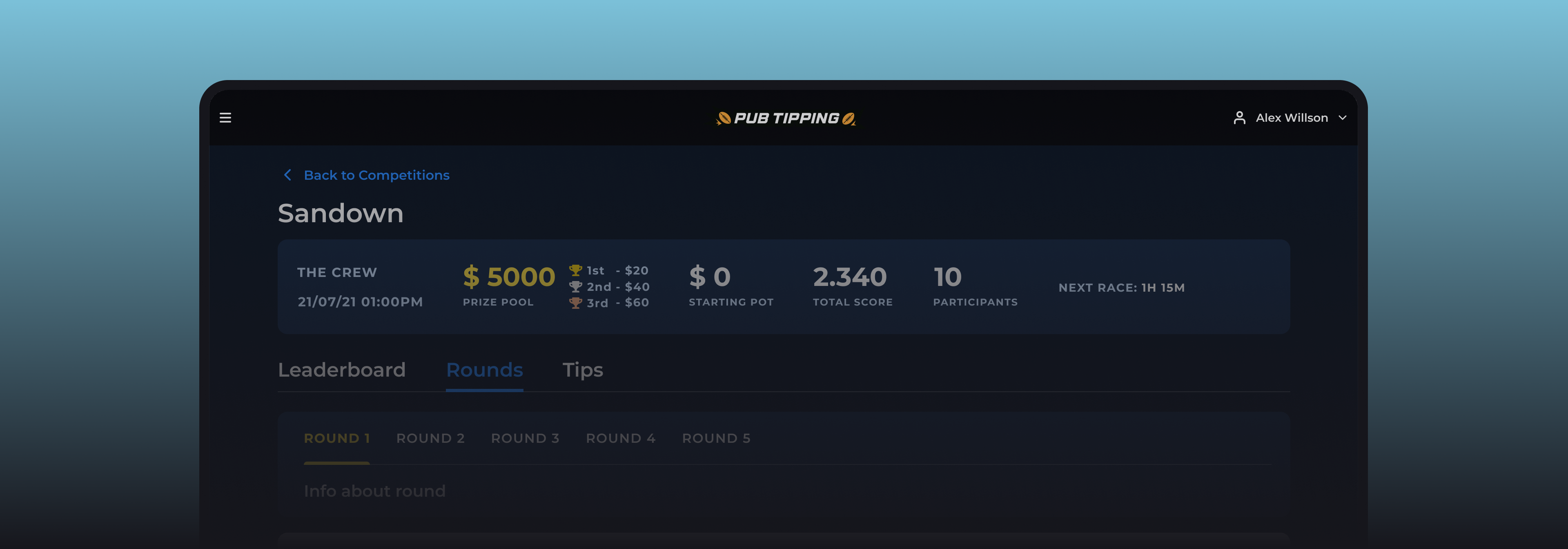
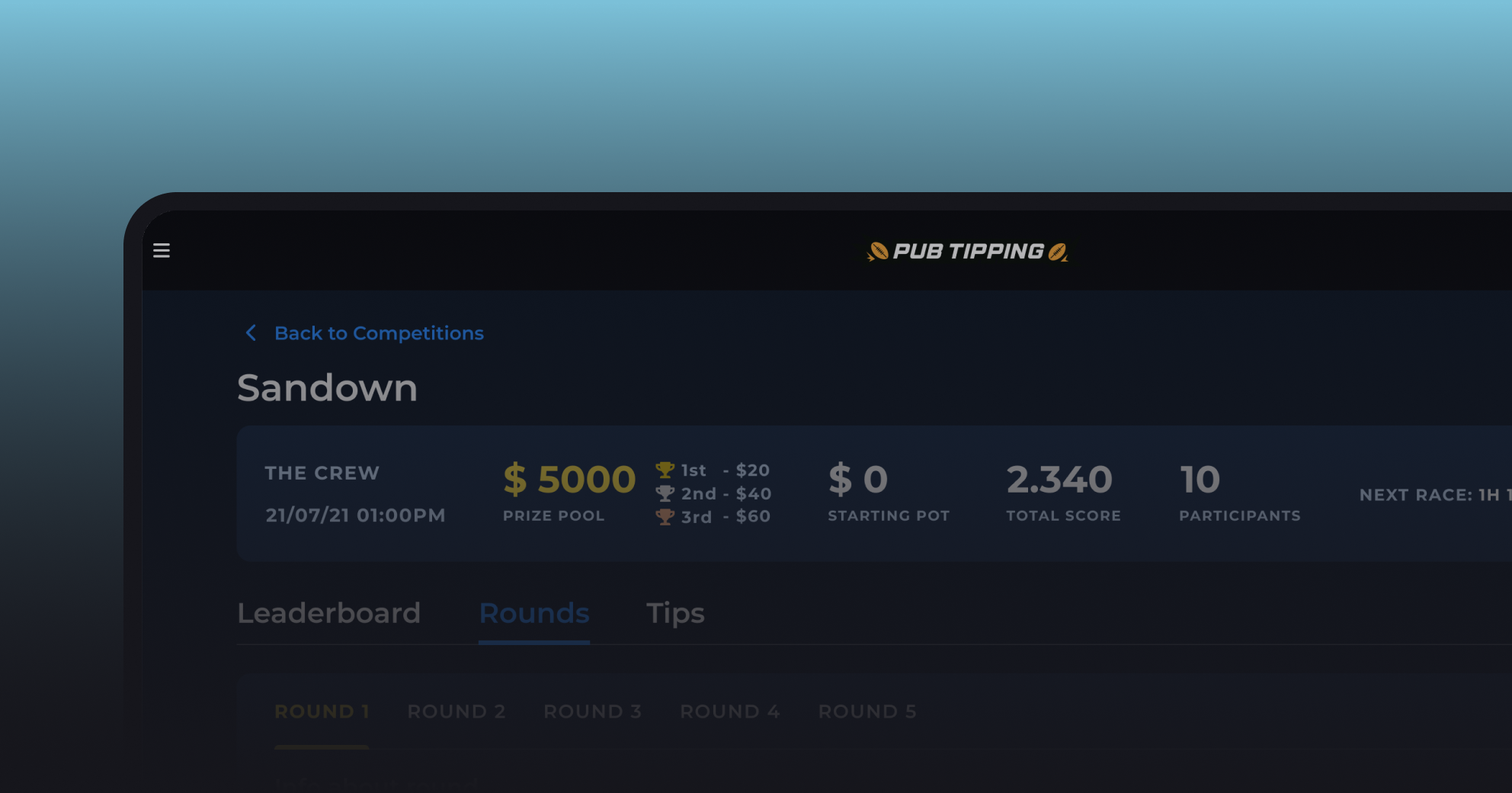
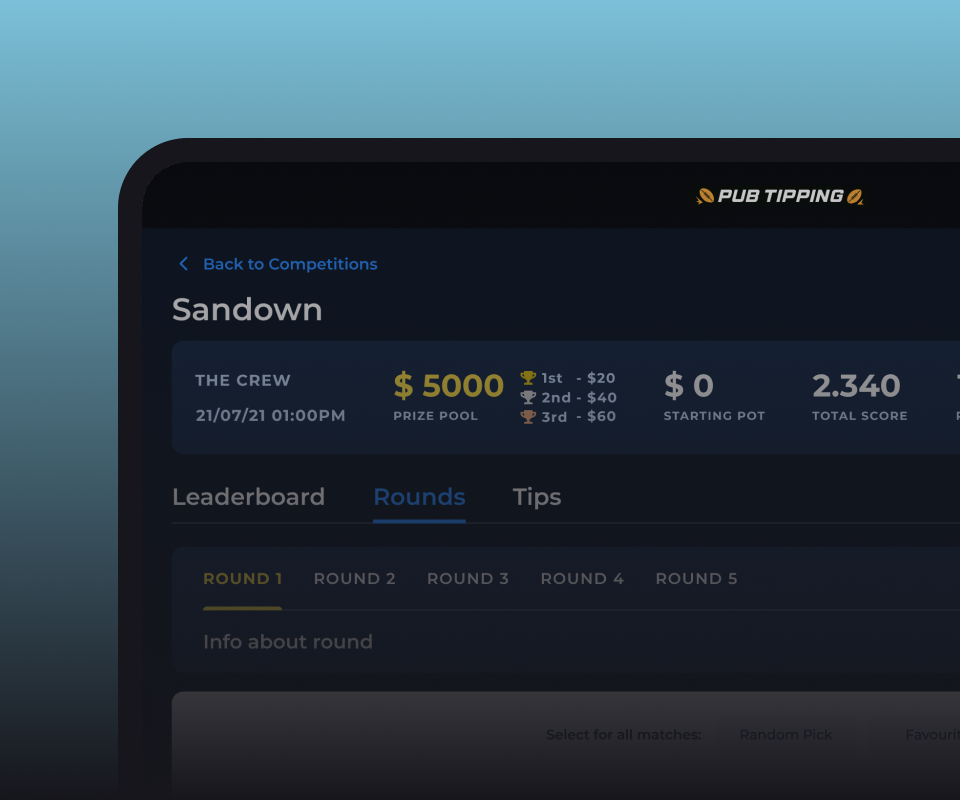
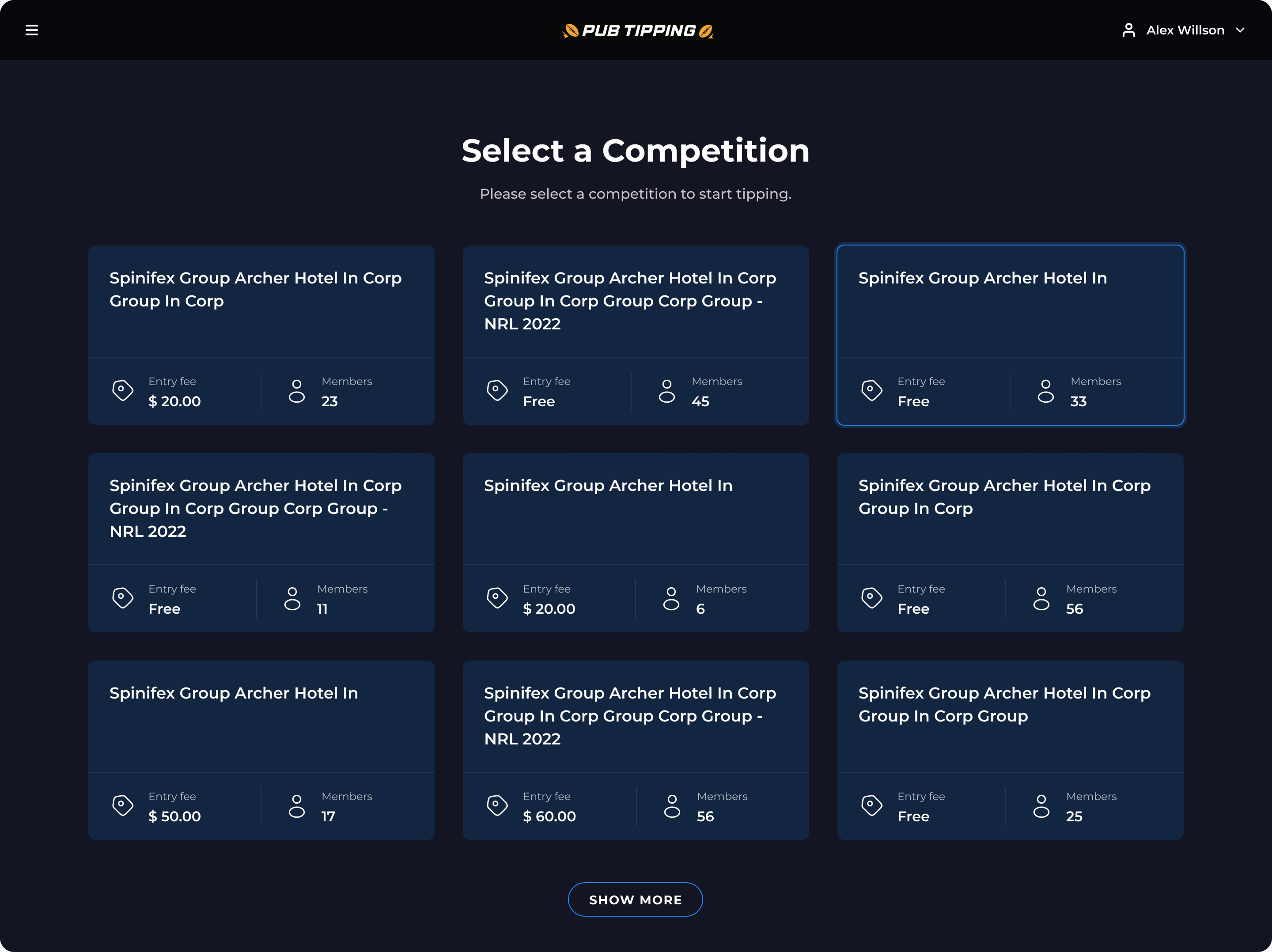
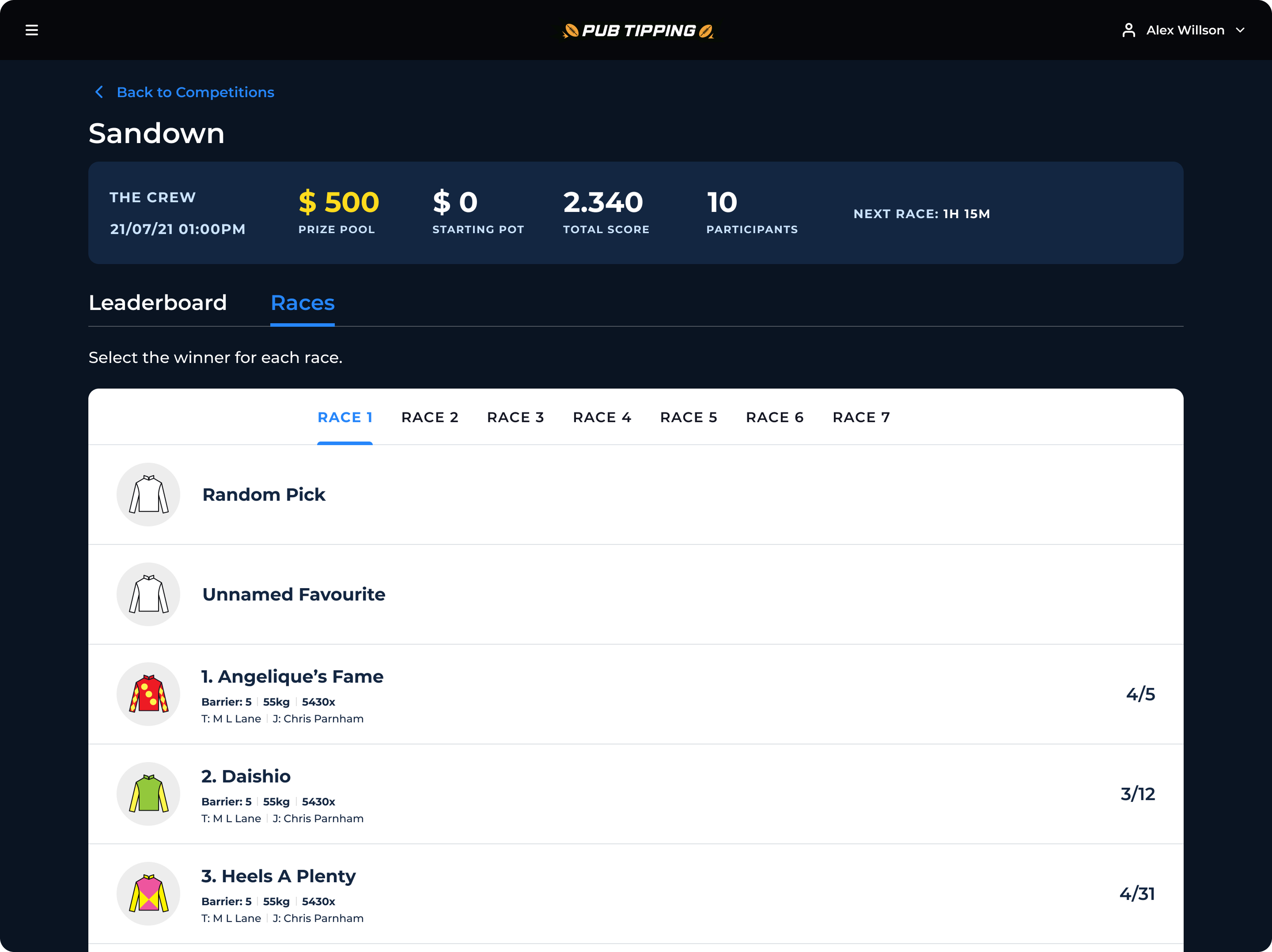
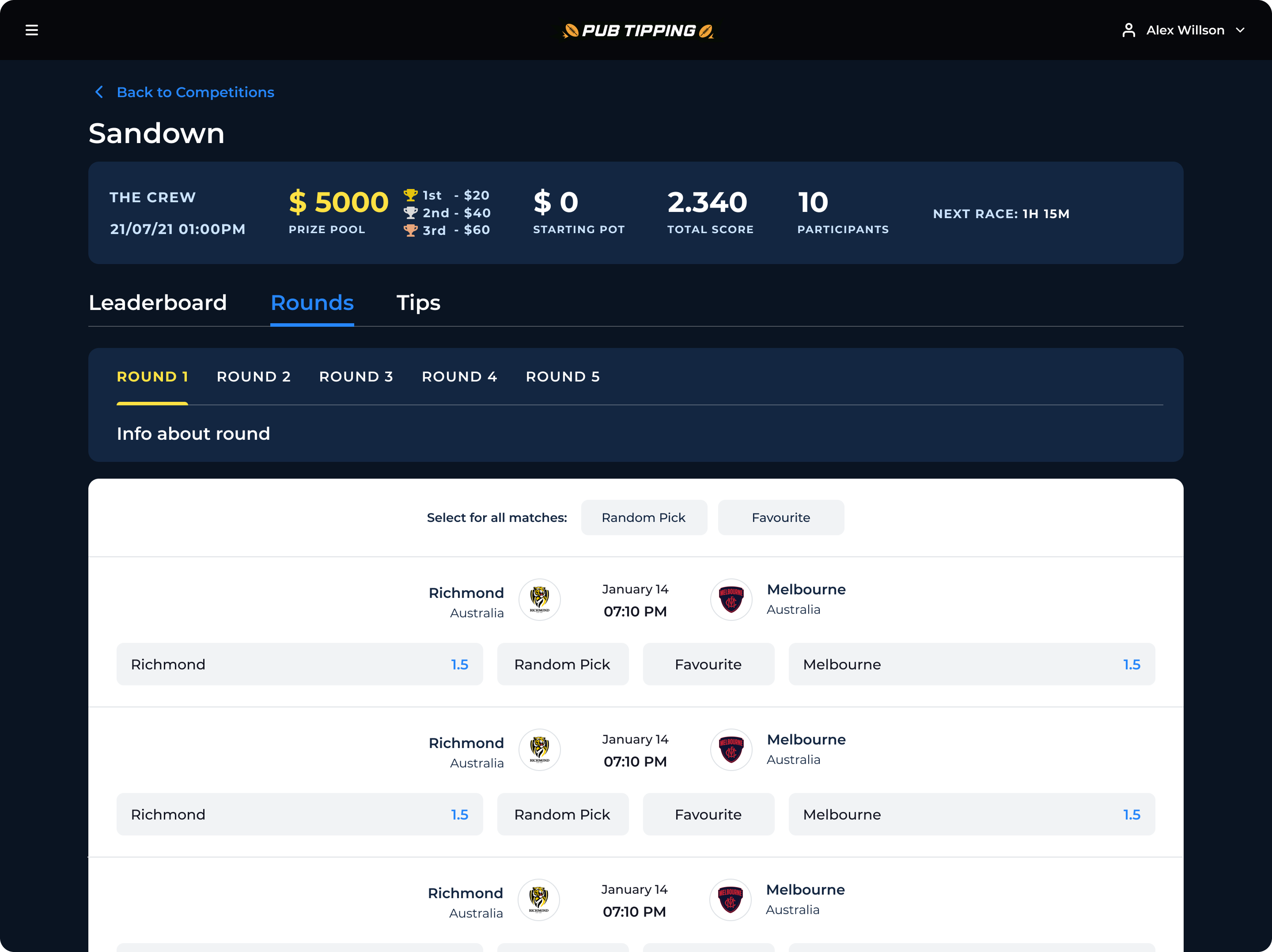
We have built a responsive web application that goes beyond simply enhancing the pub-sport interaction, revitalizing the experience by integrating the thrill of offline sports, with the interactive engagement of betting and pub experience. Fans aren't just passive observers anymore but active participants, thanks to the innovative blend of real-time bookmaker odds and the excitement of fantasy sports tipping.
A distinctive feature is the platform's ability to generate an array of coupons, incentivizing user participation and ensuring fans remain invested in the game. These coupons serve as redeemable rewards within the pub, adding a tangible element to the virtual engagement.
Moreover, we understand the diversity of our user base and their preferred modes of engagement. Hence, our platform extends its functionality beyond the digital realm. For those who wish to place their tips directly at the pub, without engaging through the website, our system allows manual tip addition by the administrator. This ensures we accommodate every fan, irrespective of their technological preferences, thus fostering a more inclusive and expansive fan engagement and retention.
the challenge
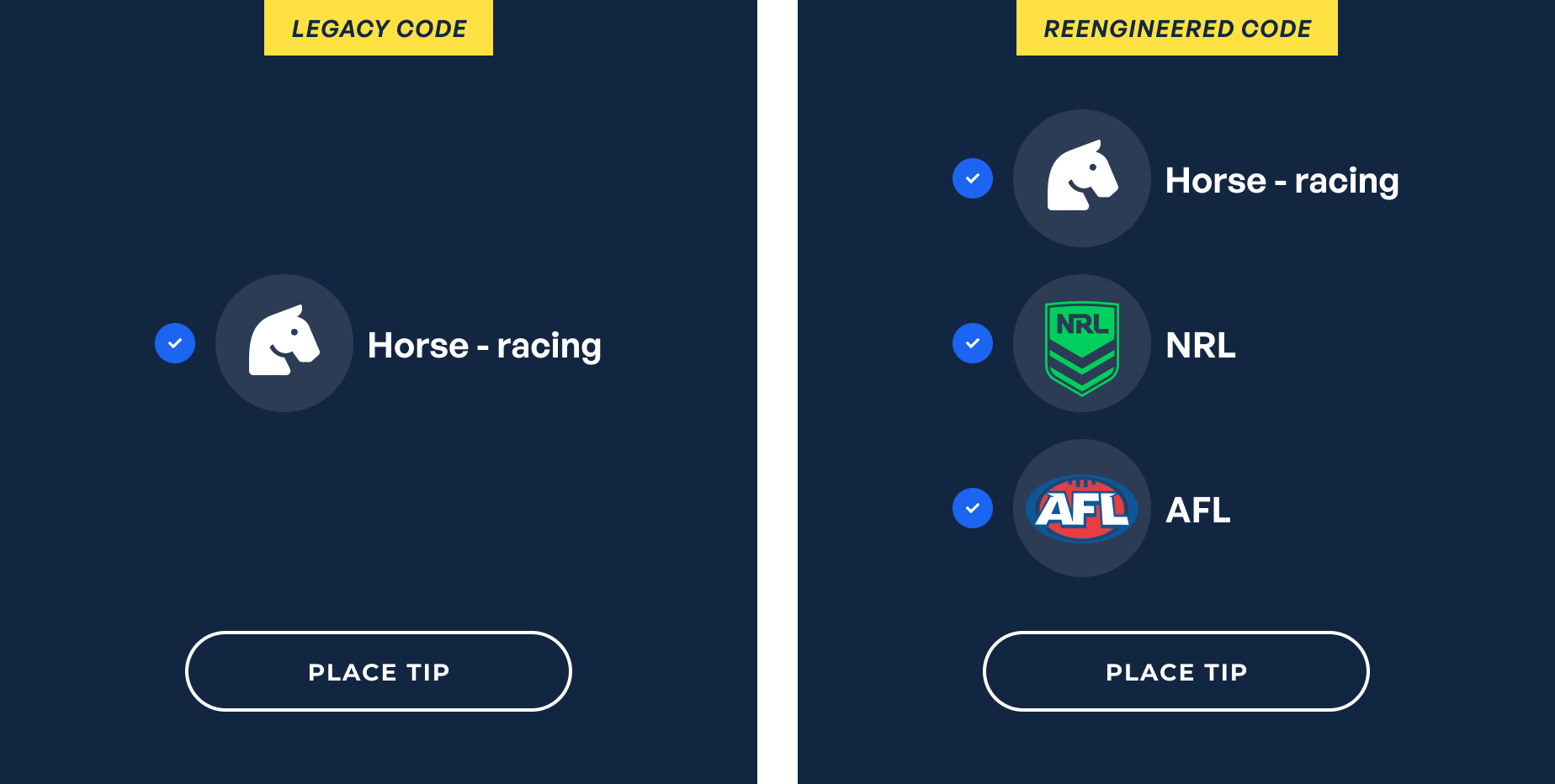
Our client approached us with a pre-existing legacy product that was inherently unable to cater for the addition of new sports. The critical challenge we faced was to engineer a core platform that could integrate a wide array of sports.
Not only did this platform need to accommodate virtually any sport, but it also had to be designed and deployed within a tight schedule. The test, therefore, was balancing the need for broad compatibility and swift execution.
core solution
To champion the challenge, we undertook a swift yet comprehensive repurposing of the legacy code in just 1.5 months. This process resulted in a foundation that can accommodate the addition of new sports.
The secret to our swift and effective solution was a meticulously planned backend architecture. This design expedited the collection, processing, scoring, and rule application for new data, streamlining the integration of various sports into the platform.
Features
User Authentication
Secure login functionality and personalized user accounts for a tailored experience.
Administrator Account
An exclusive login and personal account for the administrator, enabling streamlined platform management.
User and League Creation
Admins possess the capability to create users, initiate leagues, and add pubs, providing broad control over the platform's functioning.
Customizable Prizes
Within each pub, administrators can establish reward mechanisms based on specific criteria or actions (accomplish 'X' and earn 'Y'), fostering user engagement.
Coupon Generation
The platform can generate a variety of coupons to keep users engaged. These coupons can be redeemed within the associated pubs, adding an element of tangible reward to the digital interaction.
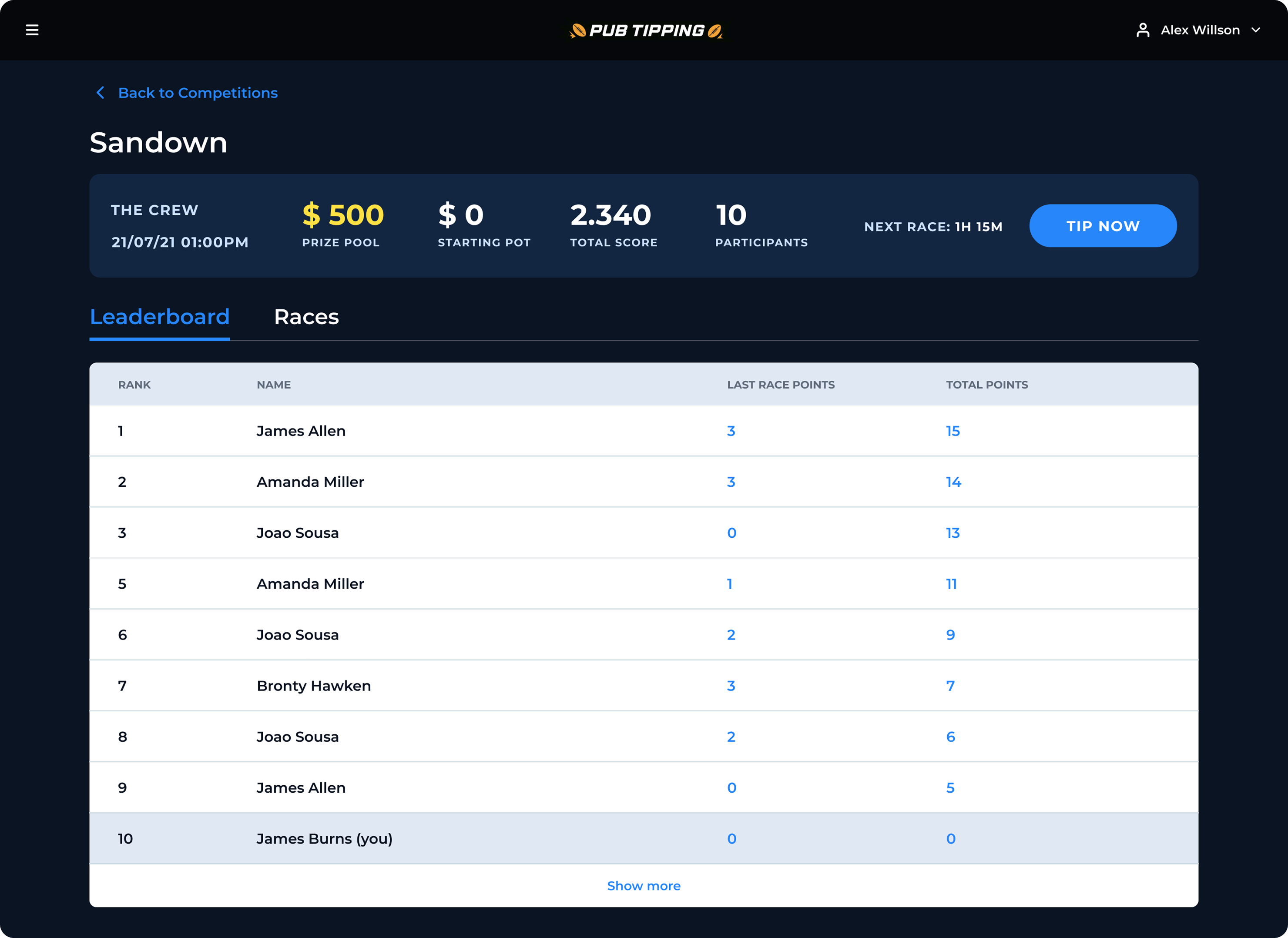
League Leaderboard
A dynamic league board displays user rankings, promoting friendly competition and interaction among users.
Advertisement Builder
A built-in ad builder provides a valuable tool for targeted promotion and marketing within the platform.
Automatic Round Finalization
The platform allows automatic round finalization and tip calculations, removing the need for manual intervention.
TECH DEEP DIVE
Mitigating Risks with Third-party APIs
To guarantee a trouble-free project launch, it is essential to consider the integration of third-party APIs carefully. Thoroughly researching and testing the data source is imperative, assessing factors such as documentation availability, data update frequency, and its impact on the application's business logic, which spoils core functionality like calculations & scoring mechanics, etc. Unfortunately, third-party APIs are prone to returning incorrect data, incomplete responses, or altering queries without prior notice.
Solution
To previse such issues and safeguard the user experience, adopt the following strategies: - Meticulously design the application's logic to minimize the impact of problems with third-party APIs on functionality and real-time data output. - Implement additional checks to ensure data accuracy and consistency - Develop manual capabilities, accessible through the admin panel, to perform critical actions or calculations in the event of API unresponsiveness or erroneous data.
Ensuring Server and Database Monitoring
You should always be aware of a problem right away, not when one of your users reports that the application is down. Unexpected events, such as server overload following a deployment, can cause performance degradation, unresponsiveness, or memory exhaustion for the server or database.
Solution
In addition to configuring the infrastructure according to the expected load, it is worth configuring server and database monitoring. It is important to configure alerts for problems/bugs in your server environment and set up an alert system for your team or responsible parties in a convenient messenger/emailer.
System scalability
Your application must be ready to handle any traffic load. The system must be able to increase performance in proportion to the additional resources.
Solution
It is important to think this through in advance so that you can study the load and be able to manage scaling. Most cloud hosting providers (AWS, Digital Ocean, etc.) provide an autoscaling option - this is a feature that allows you to automatically increase or decrease cloud services such as server capacity or number of virtual machines. But the most important thing here is to configure the rules so that your servers work optimally, the deployment is as fast as possible, and the servers are not incapacitated for a long time.
The outcome
Within the deadline, Uinno's engineering team developed a scalable solution that tackled the client's primary challenge. Our involvement in the project extends beyond the initial development phase.
During the project's most thrilling phase - the initial launch - we secured a smooth transition into the novel platform while facing challenges inherent to sports products that work with complex live data. However, our robust technical support efficiently tackled all issues, ensuring platform stability.
We persist in enhancing the application's functionality and diversifying the range of sports incorporated within the system. Following a successful launch, the addition of new sports to the platform is currently in the pipeline, setting the stage for further expansion and user engagement.
Start discovery today with Uinno and save thousands in the future
Oops! Something went wrong while submitting the form.
What’s next ?
Once your email gets to our inbox, within just 12 business hours our representative will contact you back to clear out all the project requirements and cooperation flow. We can sign an NDA upon request, however, you can be sure that your ideas are safe with us.
The first point of contact
Volodymyr Zahrebelnyi
BDM
Strategic manager focused on actionable business insights
Alexey Solovyov
BDM
Tech strategist, who don’t pitch devs, but deliver outcomes