A data-driven approach to model an in-demand product that includes business analysis, proof of concept (POC), design concept, and project estimate.
A complex human-centered process of developing a valuable product that blends business goals and user needs with design thinking in mind.


UX/UI, Solution Architecture, QA & Development for Fintech SaaS
Industry: Fintech
Location: Australia
Tech Stack:
Offered Services: MVP Development, Solution Architecture, Backend & Frontend Development, DevOps Implementation, PM
Timeline: 2020 - Ongoing
Collaboration model: Fixed Price
Platforms: Web
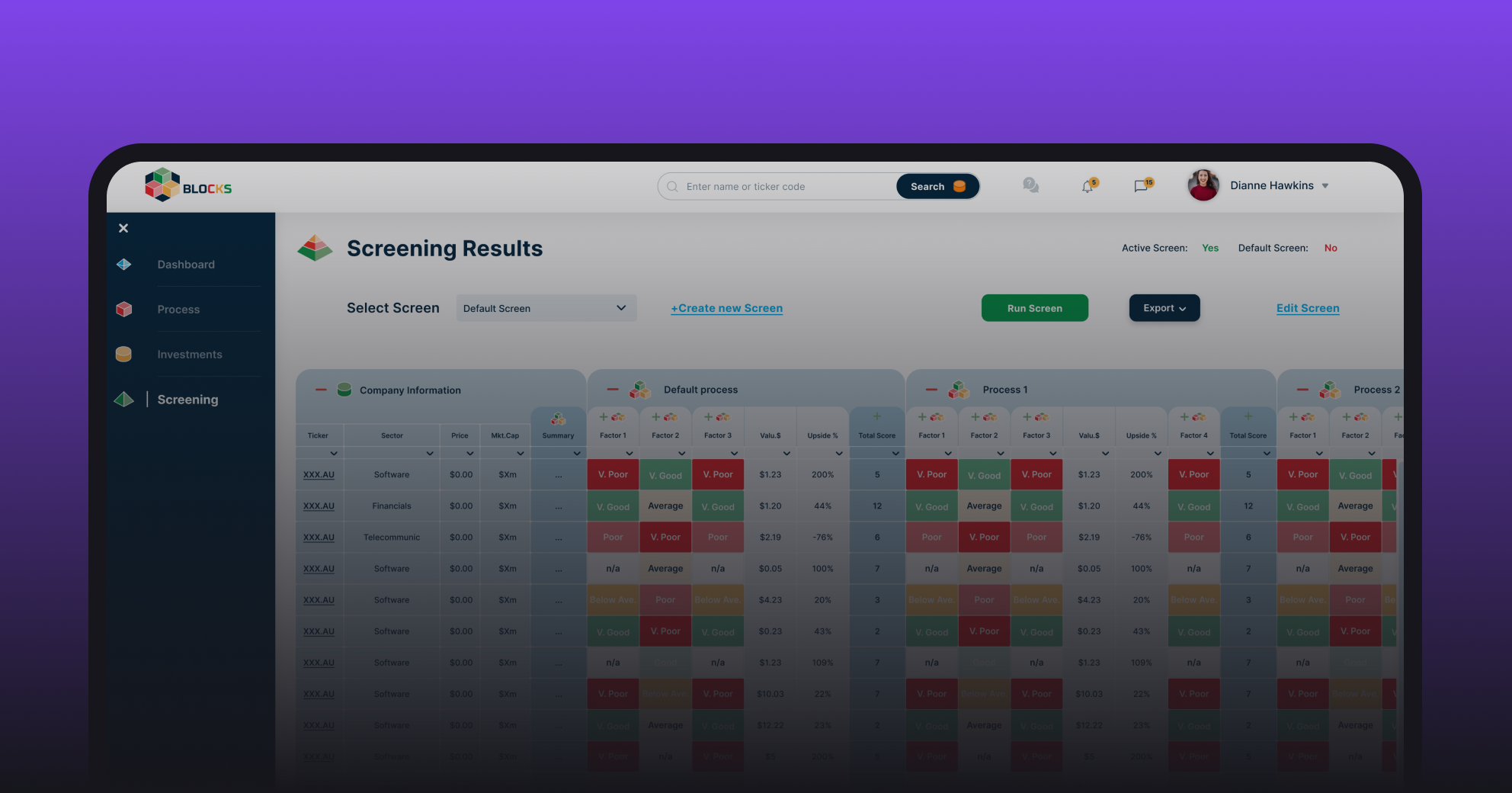
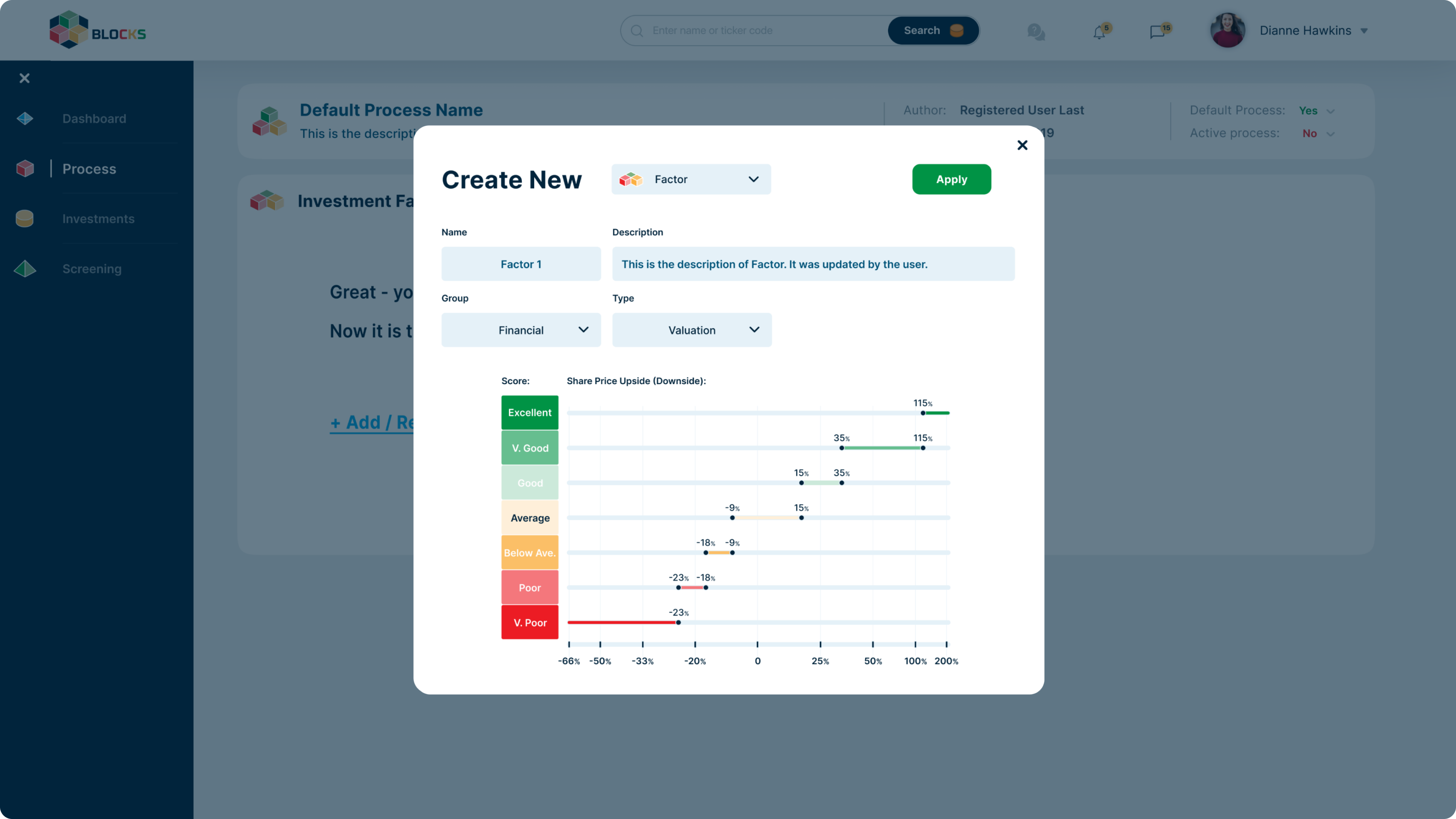
“Blocks” is an Australian fintech startup, similar to the Bloomberg trading and investing platform, with a goal to help investors gather comprehensive data about each company on the market, evaluate its potential and decide on the options portfolio.
The whole project was a challenge itself. The idea was to create a minimum viable product for an investment software from the grounds. One of the core requirements from the client was to fit in the allocated budget so we had to estimate only the vitally important functionality.
Another crucial point was to build the right solution architecture from starters in order to ensure further product scalability.
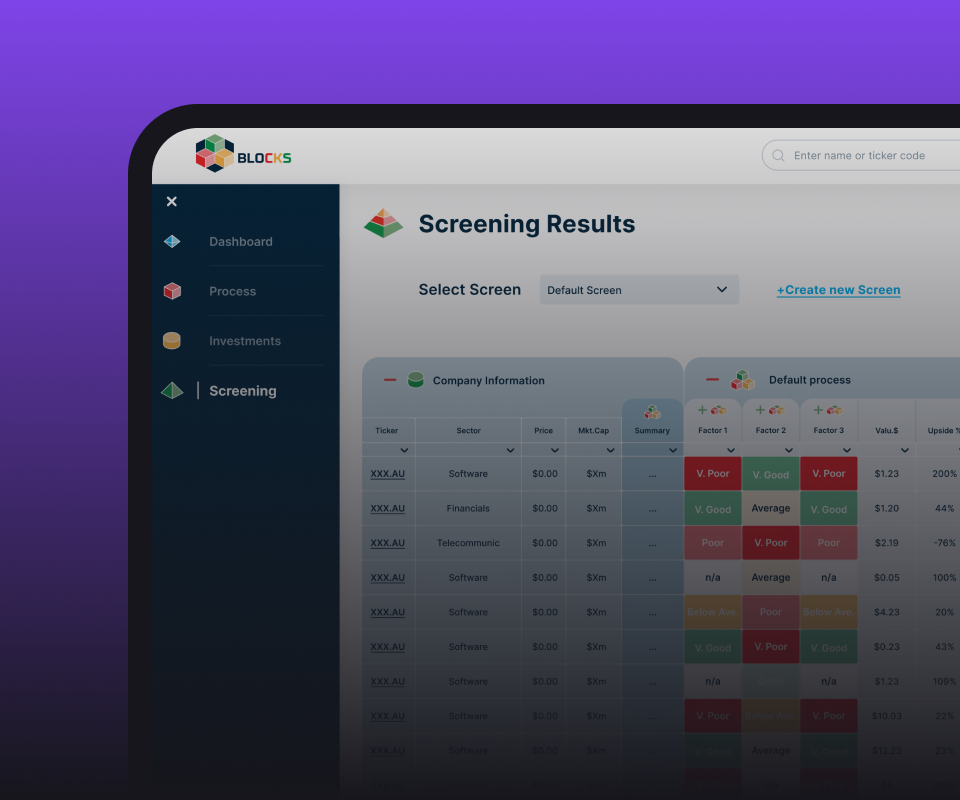
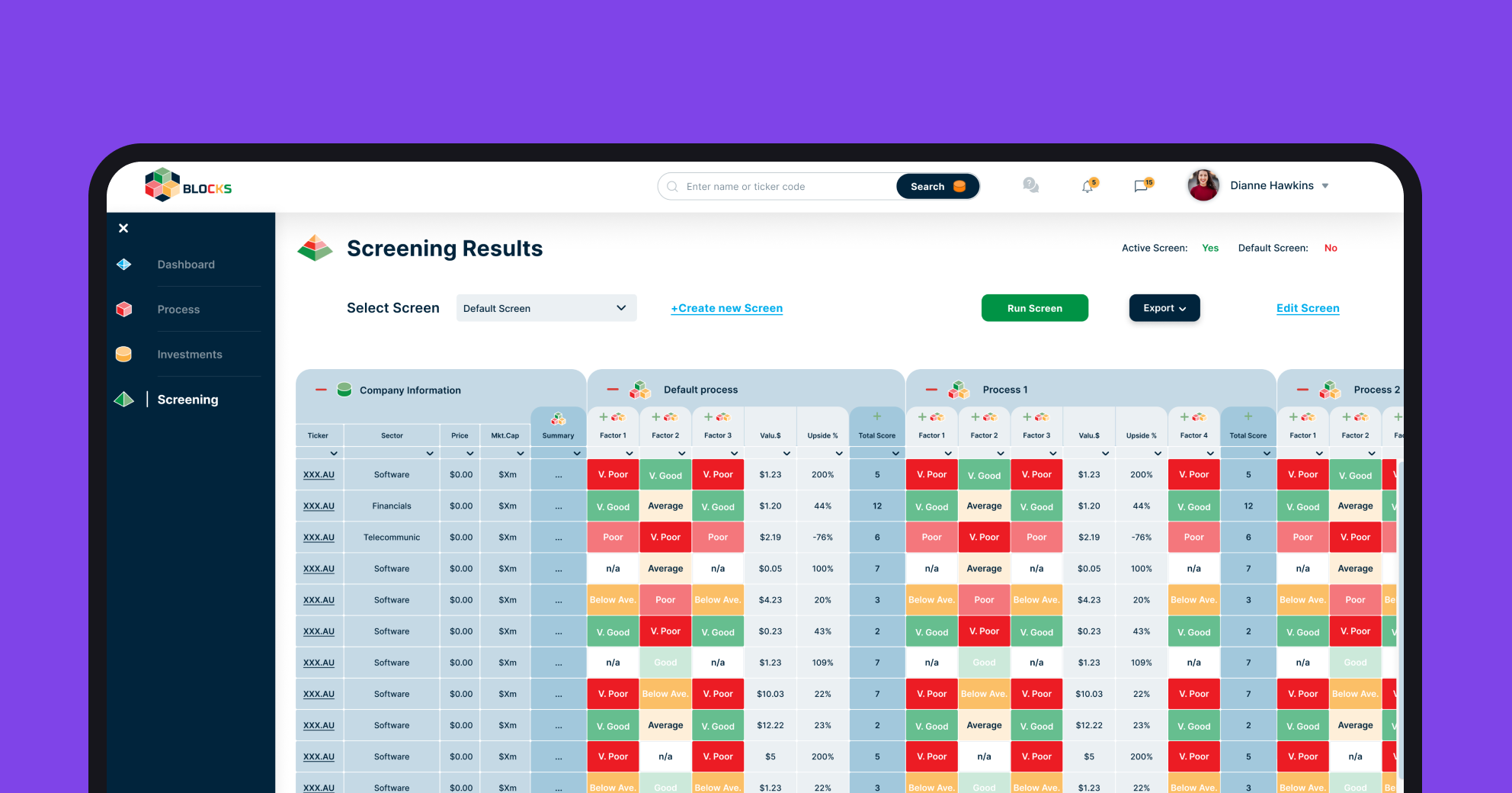
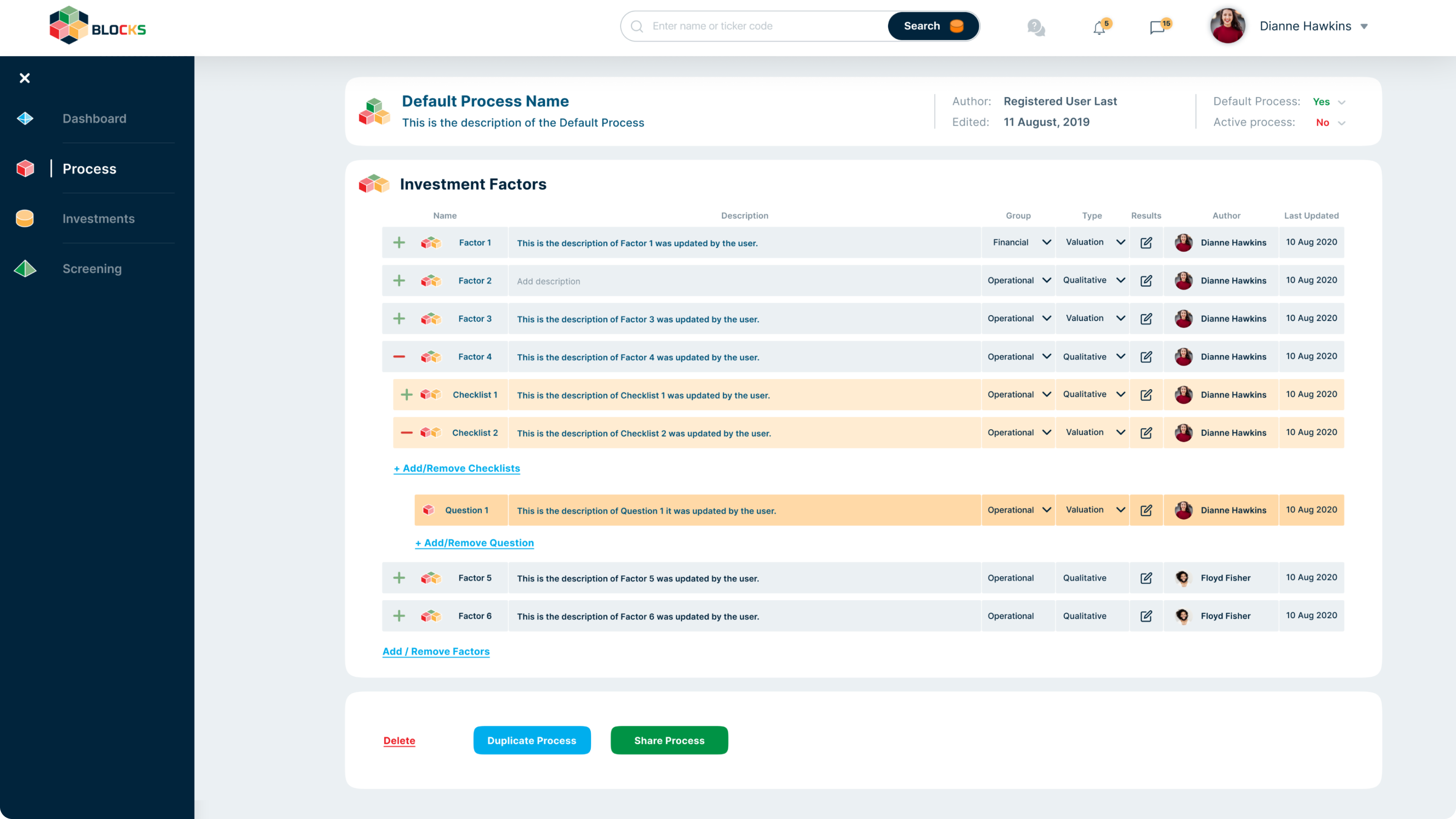
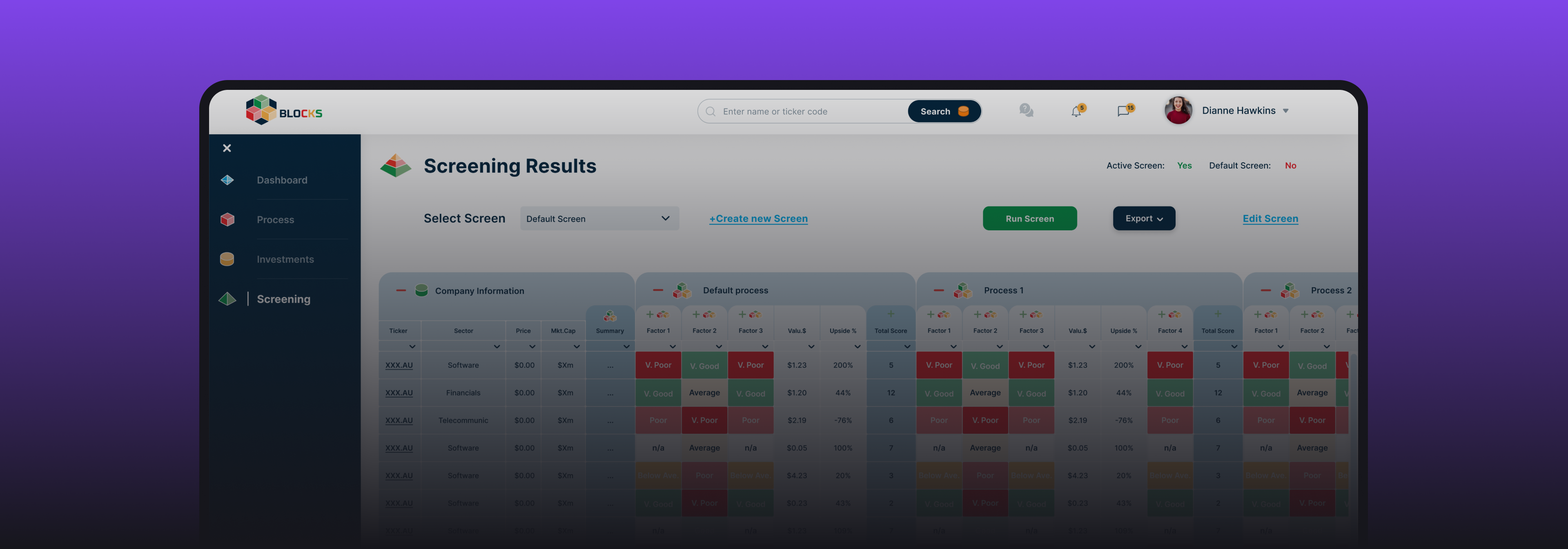
The initial project functionality should include the possibility to gather all the available information from the third-party sources, visualize it conveniently for the user and allow the investor to evaluate and analyze existing data for data-driven decision-making.
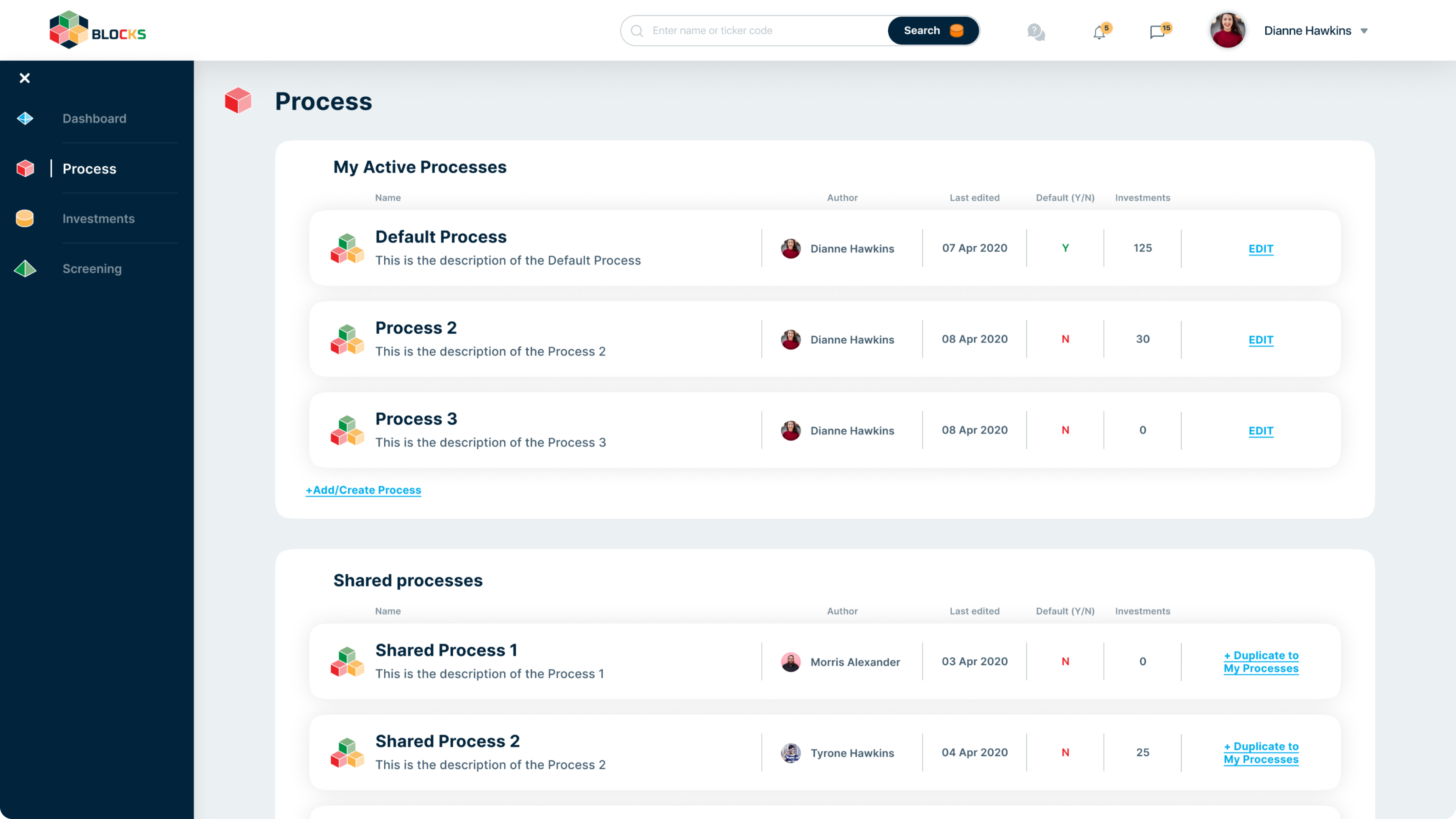
It is a complex project as some artifacts are cross-cutting which means that some factors can be added to various companies and once modified in one evaluation process, they get changed in all the others. The same relates to processes themselves.
Before allocating the necessary companies, the screening functionality with a huge database should select information from various places to create a unified data storage.
We have gone through many challenges, including the ones connected with frontend development and other smaller-scale tasks. There were times when lots of developers worked overtime. Still, we have managed to overcome all the challenges and fit in the project budget with noteworthy results.

Uinno team has performed the whole development cycle from the architecture design to backend/frontend development and the project deployment. Also, we have created a design concept but the implementation was not on our side.
It is a turnkey solution that was developed from scratch. Initially, the client only provided us with the database architecture. We have verified and modified it according to the requirements, additionally adding certain improvements.
Once it was finally approved, we've started utilizing it for the project.

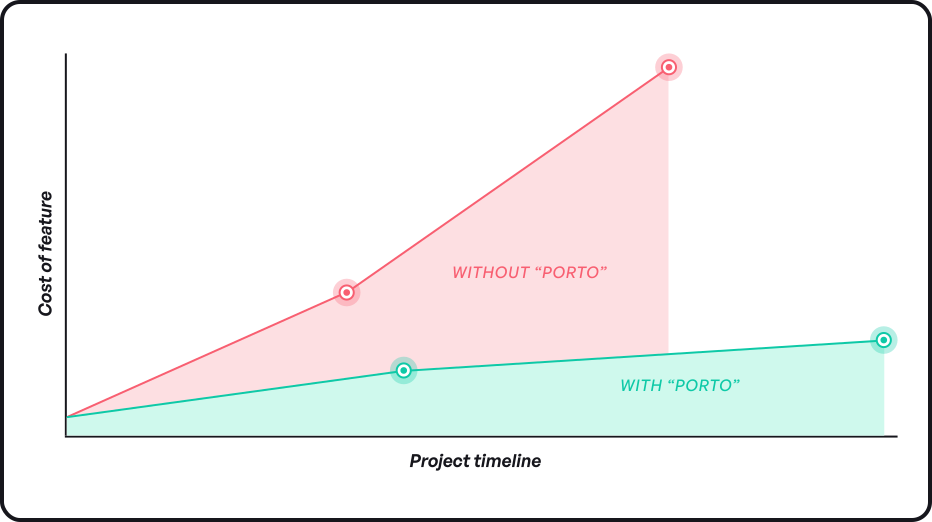
Based on our experience, we have allocated the right approach to the development of a minimum viable product that will eventually help to streamline further product development.
One of the core ingredients is implementing the Porto architectural pattern with task fragmentation and container management. It consists of three layers: vendor, ship, and container. It allows organizing code with the reusability of product business logic in mind across possible projects. The Porto architecture allows making product modifications fast and with the minimum resources and in the most convenient way. The feasibility of bugs is minimized.
Besides, the Porto architecture implementation we introduce a stack of possible solutions that will only enhance the MVP development flexibility and smooth further product development:
We use these and many other specific methods to make sure the scalability and flexibility of any MVP Uinno delivers.
The Uinno development team has managed to deliver a Bloomberg-like investment software tool within a limited budget. The resulting solution is an MVP with minimal but promising functionality.
The next projected stage is creating advanced functionality including:
Ultimately, we have developed a turnkey product that utilized the full cycle of software development services: solution design, solution architecture, design concept, frontend and backend development, quality assurance, and project deployment.
Within its implementation, we've used a test-driven development approach to easily sustain the potential project modification. Besides, we have introduced a new approach to MVP development which makes the process of adding new functionality as smooth as possible.

you have a vision